Drinkit
The barista's choice. A controlled study without compromising trust
Role:
Product designer
Focus:
Concept and research
Sector:
Product strategy,
UX research, concept design
Business context
Drinkit is a product with a repetitive ordering pattern: users frequently return to the same
drink. This makes the selection process quick
and comfortable, but limits menu exploration
and the adoption of new habits.
Hypothesis
Paid "random coffee" can encourage users to try new drinks
and add a playful element
to routine orders
The concept takes inspiration from mystery formats, advent calendars, and gamification mechanics used in other products.
Research
During my research and behavioural analysis,
I realised that randomness creates barriers in such a familiar, paid-for product as coffee
—
Coffee is a daily ritual where quick
and intuitive solutions matter
—
Paid uncertainties appear to be riskier
than free or bonus surprises
—
Research shows that frustration from a poor outcome is stronger than the joy of saving money. This is known as the loss aversion effect.
—
Drinkit's mechanics already set a high standard for value and control
Key insight
In standard paid products, users do not fear accidental occurrences as much as they fear a loss of control
Product strategy
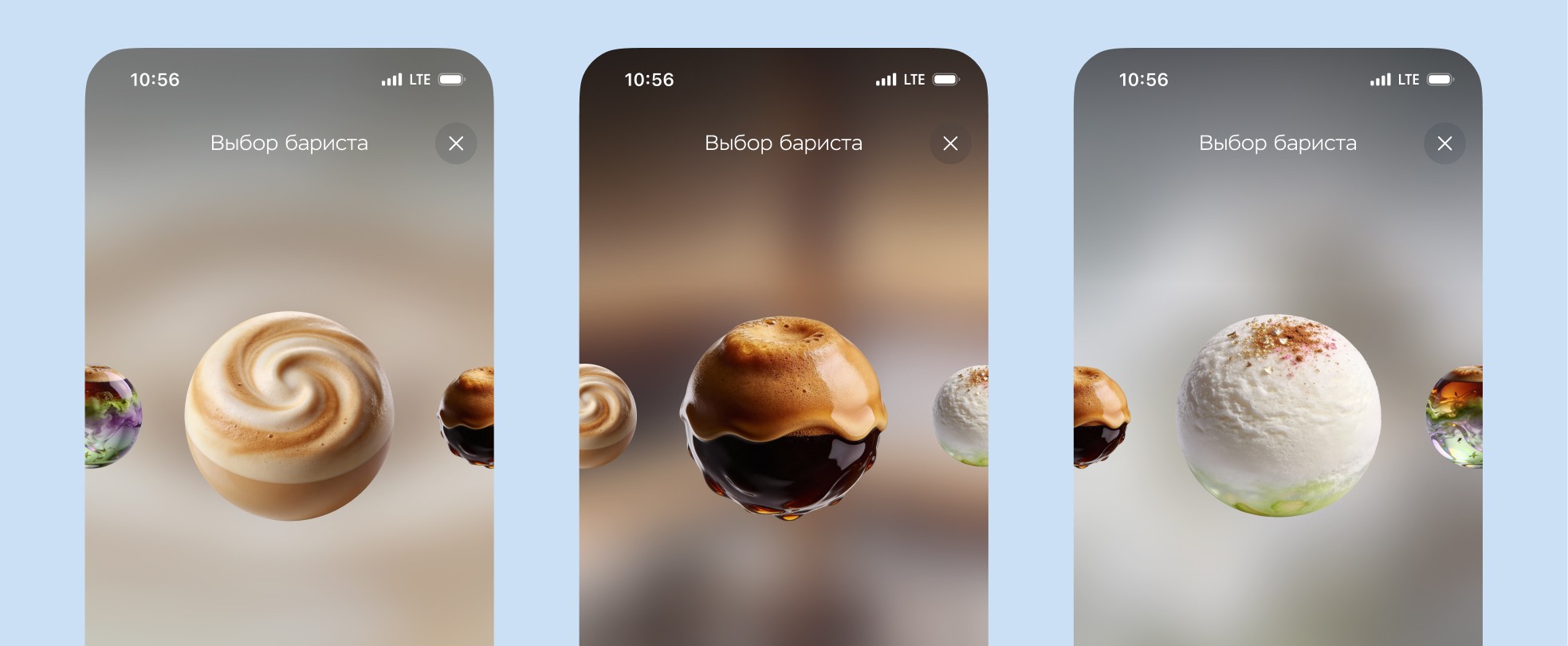
'Barista's Choice' is not a way to sell a random drink. It is a way to expand your taste horizons.
Each successful experience adds a new option
to the user's comfort zone
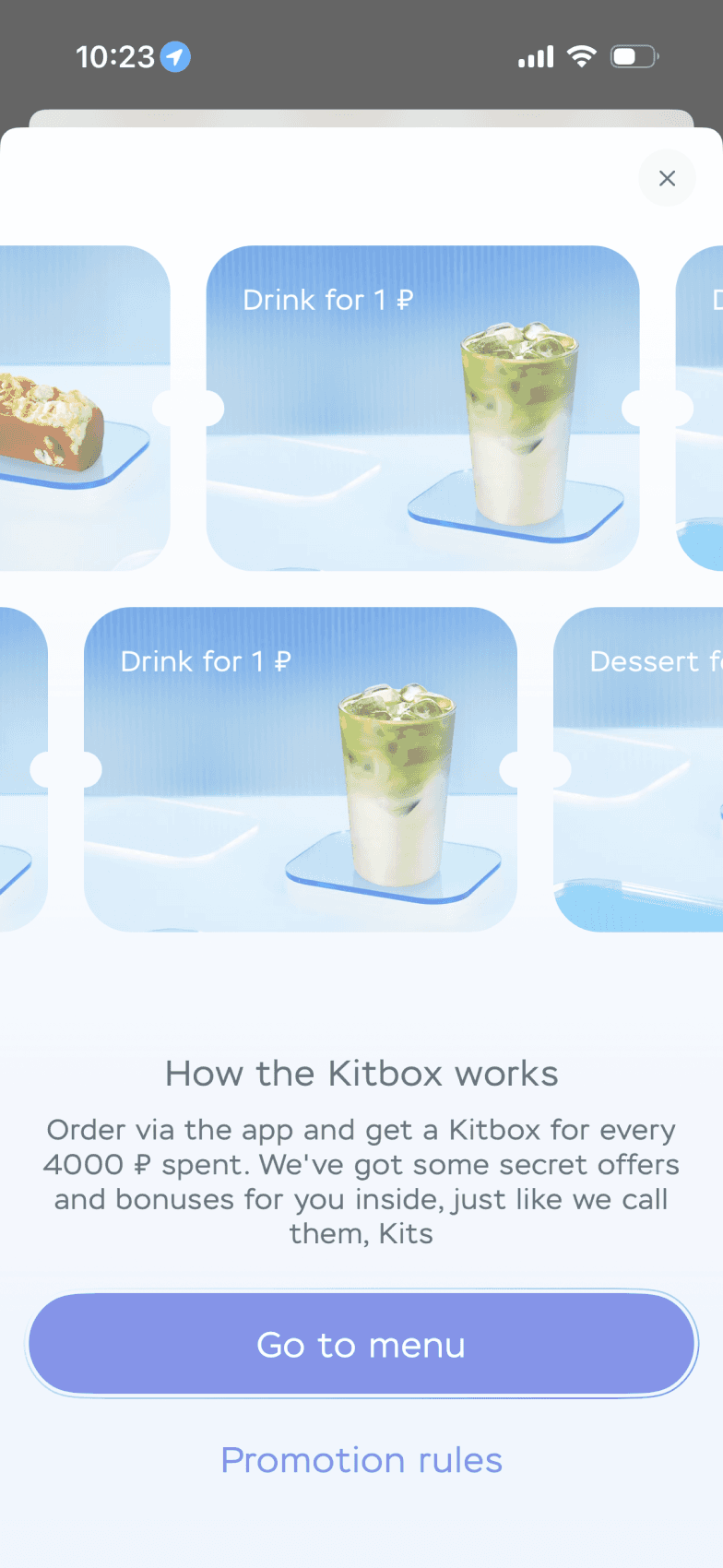
Kitbox — a loyalty reward
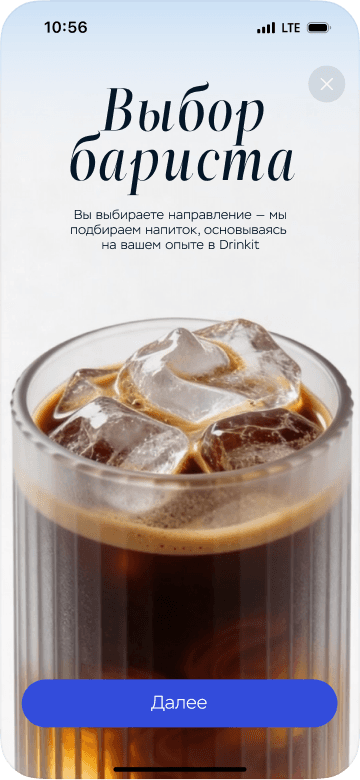
Barista's choice — safe exploration
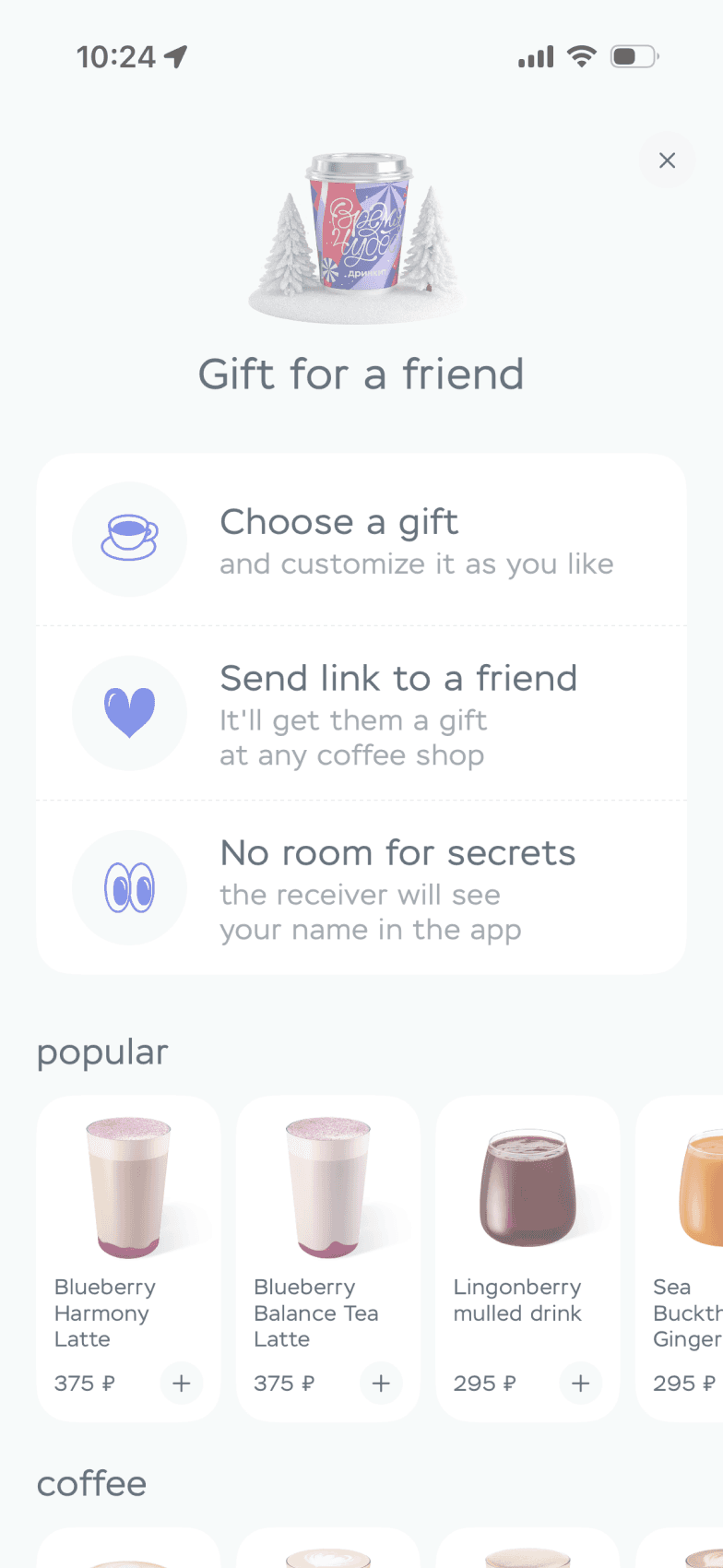
A gift is a social connection
From experience
to transformation
The initial goal was a playful surprise, but the strategy evolved. I shifted the focus from entertainment to transformation. Users are not just looking for a drink, but for a specific state of mind.
I defined four 'Energy Spheres' that serve as catalysts for these states.
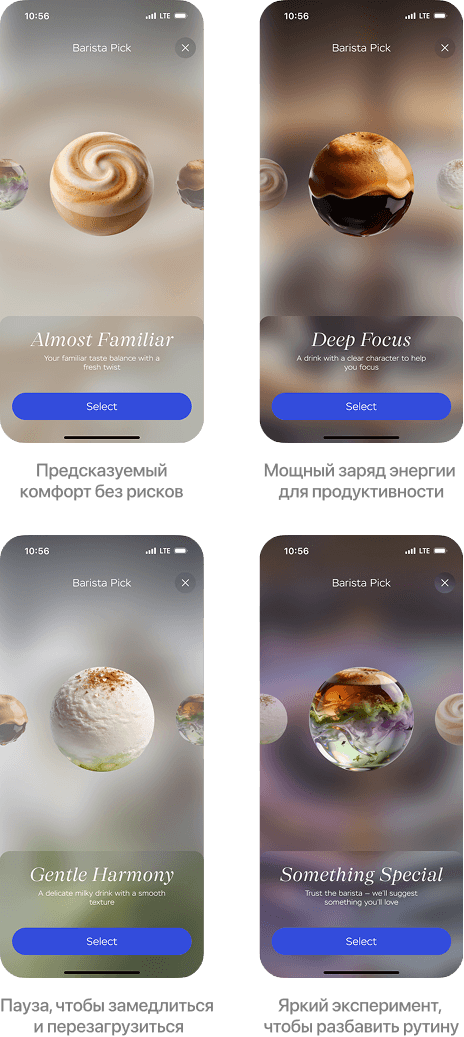
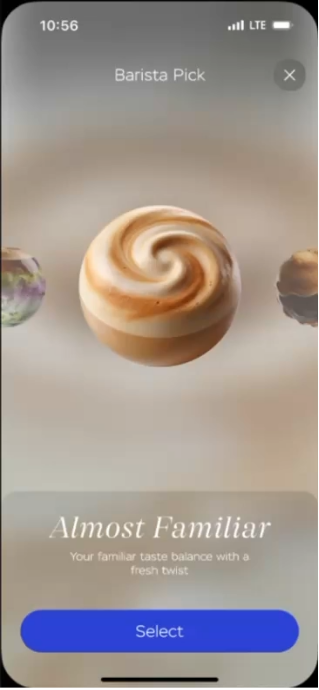
Clarification before recommendation
After selecting a state, the user can add constraints to maintain a positive experience.
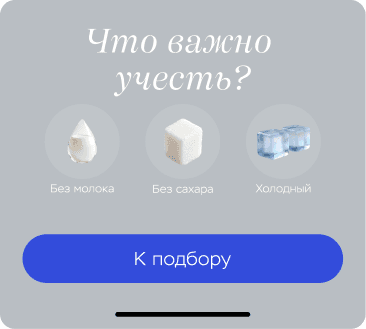
The spheres show current preferences,
whilst the clarifications show what should be excluded.
How to test
a hypothesis
Success lies in users frequently trying new drinks, rather than ordering
the same thing after experimenting
Primary
Menu Expansion Rate —
how many different drinks
a user tries on average
over a 30-day period
Secondary
whether the user returns
to the suggested drink
whether they save it to their favourites
whether order frequency is increasing
whether the user adds
3+ favourite drinks instead of one
Guardrails
customer satisfaction (CSAT / NPS)
time of choice
order cancellations
complaints
User journey
The feature sometimes appears on the homepage as an alternative to the standard order, and in the catalogue if the user is struggling to choose a drink.
It assists during moments of hesitation and reduces decision-making time.
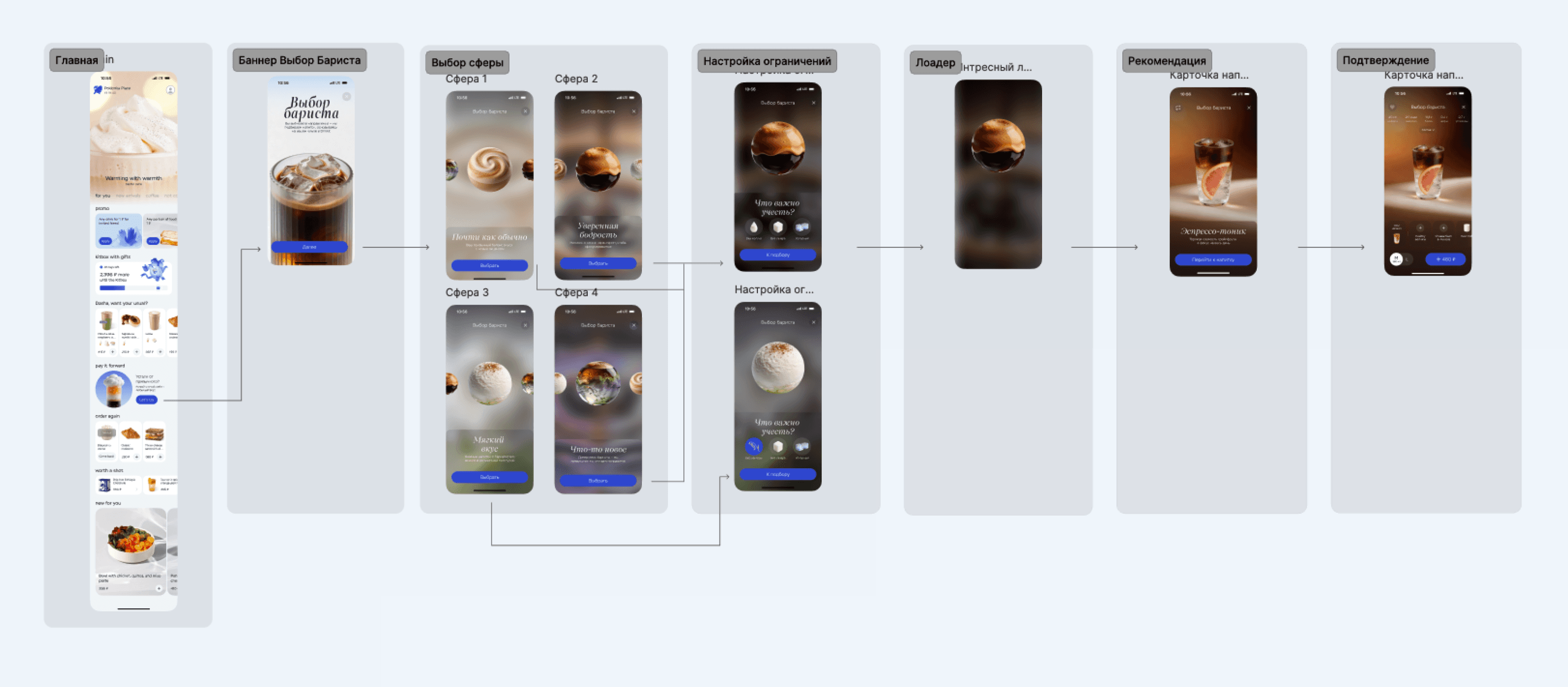
After this experience
If the recommendation is successful, users can save the drink to their favourites and return to it later.
This mechanic helps turn successful experiments into new habits, gradually expanding the user's palate.
A visual metaphor for guided taste exploration.